

Description
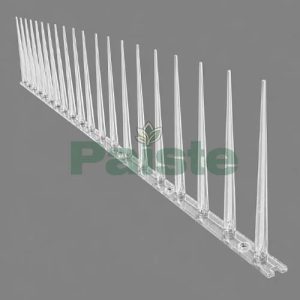
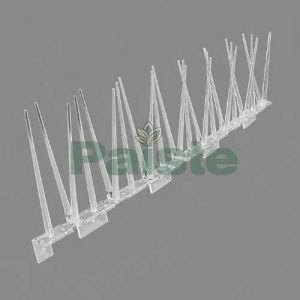
GKPC-77-1 plastic anti bird spikes help you discourage birds from landing and roosting on suitable building surfaces. Each polypropylene (PP) strip has a 50 cm long, 4.5 cm wide base and a three-row spike arrangement. You can specify this model for wholesale supply, retail packs, and professional bird control projects.
As a specialist bird spike manufacturer and wholesaler in China, Paiste helps you match product specifications, packaging, and delivery arrangements to your business. With GKPC-77-1, you can offer your customers a lightweight physical deterrent that needs no electricity, batteries, or chemical refills.
Key Advantages of Plastic Anti Bird Spikes
Three Rows to Obstruct Suitable Landing Areas
The three-row layout creates a physical obstacle across the installed strip. You can use it to make exposed resting points less accessible and help reduce bird activity above areas that need regular cleaning.
However, three rows do not guarantee complete coverage on every ledge. Measure the full landing surface and assess the target birds before choosing your layout. The 4.5 cm measurement describes the base width, not a verified deterrent coverage width.
50 cm Strips for Straightforward Project Planning
The half-metre base makes quantity estimates easier. For example, a straight 10-metre run requires 20 strips in one row before you allow for corners, adjustments, or spares. This helps you prepare project quotations and explain pack coverage to your customers.
For longer runs, you can arrange strips end to end. Where the landing area is deeper, plan additional parallel runs instead of leaving usable space behind the spikes.
Lightweight Polypropylene Construction
The PP construction gives you lightweight strips that are convenient to handle, position, and pack. In addition, the plastic material does not develop metal rust. You can therefore offer an alternative for buyers who prefer a plastic bird deterrent for suitable exterior applications.
This model uses polypropylene. If your customer requires clear polycarbonate, compare a separate model such as the GKPC-17 transparent bird spike, which has different dimensions and a two-row layout.
UV-Resistant Material for Outdoor Applications
The UV-resistant material supports outdoor use on suitable building surfaces. Nevertheless, actual service life depends on sunlight, temperature, exposure, and installation quality. Discuss your local conditions and any weathering test requirements with Paiste before confirming a specification.
For your wholesale customers, clear material requirements provide a better basis for purchasing than an unsupported promise of a fixed lifespan.
No Power Supply or Chemical Replenishment
You can install these plastic anti bird spikes without arranging wiring, replacing batteries, or replenishing a chemical repellent. The product works through its physical arrangement, helping you manage selected landing points with a simple installation.
Maintenance mainly involves inspecting the strips, clearing debris, and checking the fixings. Keeping the installation intact helps preserve the obstacle you created.
Applications of Plastic Anti Bird Spikes GKPC-77-1
You can consider this model for accessible landing surfaces around residential, commercial, and industrial properties. Typical uses include:
- Window sills and building ledges: Discourage perching above windows, entrances, and pedestrian areas.
- Parapet walls and roof edges: Protect suitable resting points while maintaining drainage and maintenance access.
- Shop signs and advertising structures: Help reduce bird activity above shopfronts and display areas.
- Wall tops and suitable fence caps: Cover resting surfaces without interfering with gates or normal use.
- Warehouse and service structures: Address specific perching points as part of a wider bird management plan.
- Balcony ledges: Protect appropriate exterior edges while keeping spikes away from normal handholds and occupied areas.
Before recommending a layout, check the surface depth, target species, and intensity of bird activity. Spikes do not seal openings or enclose nesting spaces. Where birds can enter a sheltered cavity, consider an appropriate exclusion system as part of the project.
For more options, explore Paiste’s bird spike range and compare each model’s material and configuration.
How to Install and Fix Your Plastic Anti Bird Spikes
1. Survey the Site and Calculate Quantities
First, measure the length and depth of every landing area. Check corners and spaces behind signs where birds may settle beside the intended installation. Divide the total length of each planned run by 0.5 metres, round up, and add an allowance for your layout.
Use extra parallel runs where required by the surface and target birds. Do not treat the base width as a guarantee of complete bird exclusion.
2. Clean and Prepare the Mounting Surface
Remove loose debris, grease, and unstable coatings using methods suited to the surface. Make sure the mounting area is sound before fixing the strips. Adhesive installation also requires the preparation and drying conditions specified by the adhesive supplier.
Arrange suitable access equipment for elevated work. If you find active nests or substantial bird contamination, obtain appropriate local or professional advice before preparing the area.
3. Check the Layout Before Permanent Fixing
Place the strips in position first. Check for gaps, unsupported sections, and remaining landing space behind the spikes. Keep drains, vents, opening windows, and service access clear.
For curved surfaces, confirm the permitted bend and fixing arrangement with Paiste. Do not force the base around a tight curve or assume that it can bridge an uneven surface securely.
4. Match the Fixing Method to Polypropylene
Mechanical fixing: Where the supplied base includes suitable fixing holes, use fasteners and anchors appropriate for the substrate. Tighten them carefully to hold the strip without crushing or distorting the plastic. Agree on a suitable method before penetrating waterproof surfaces.
Adhesive fixing: Polypropylene can be difficult to bond with general-purpose adhesives. Select a system explicitly suitable for PP, the mounting surface, and outdoor exposure. Follow its preparation, primer, and curing instructions, and test the bond before completing the installation. See 3M’s guidance on bonding low surface energy plastics for the material-selection principle.
Confirm the actual base configuration and recommended fixings before supplying installation kits. Adhesive or fastener inclusion should be stated separately in your order.
5. Inspect and Maintain the Finished Installation
After installation, check that every strip is secure and that birds cannot use gaps between protected sections. Allow any adhesive to cure fully before testing its bond.
Inspect periodically and after severe weather. Clear accumulated leaves or debris, replace damaged strips, and repair loose fixings promptly. This also gives you an opportunity to adjust the layout if birds move to an adjacent resting point.
PP Bird Spike Production and Quality Control
Your wholesale order needs consistent specifications as well as efficient production. Paiste focuses on production coordination and strict quality control to support bulk purchasing and repeat orders of plastic anti bird spikes.
Before production, confirm the approved specification and inspection requirements. For GKPC-77-1, the acceptance points should include:
- Polypropylene material specification and agreed colour.
- 50 cm base length, 4.5 cm base width, and three-row arrangement.
- Complete moulded spikes and a base free from visible cracks or significant deformation.
- Consistency with your approved sample and agreed dimensional tolerances.
- Correct pack quantities, labels, and carton identification.
These checks give you a clearer basis for evaluating incoming goods. In addition, confirming packaging artwork early helps avoid preventable delays between production and dispatch.
If you supply Europe, Australia, or North America, share your destination and customer requirements before ordering. Ask for available material records, test reports, or certificates that apply to the exact model and specification. Any additional testing should be agreed before production; one document should not be assumed to cover every market.
OEM & ODM Customization for PP Bird Spikes
You can discuss customization with Paiste to match your sales channel and brand presentation. Available project discussions include custom colours, branding, packaging design, pack quantities, and changes to length or spike configuration.
- Private label packaging: Develop a retail or trade pack with your brand and product information.
- Labels and barcodes: Align your order with warehouse, distributor, or retailer requirements.
- Installation inserts: Give your customers instructions suited to the confirmed product and fixings.
- Colour requirements: Share a reference sample or colour specification for feasibility review.
- Design changes: Discuss tooling, sample approval, quantities, and costs before modifying the standard model.
Your customized version should have a written specification. This keeps its dimensions, material, colour, and packaging distinct from the standard GKPC-77-1 product.
Prompt Dispatch and Delivery Planning
You can help keep your purchase on schedule by providing the quantity, destination, packaging requirements, and target arrival date with your inquiry. Paiste supports prompt dispatch through coordinated production, packing, and shipment preparation.
For accurate planning, confirm production lead time separately from transport time. Your order quantity, customization, shipping method, and customs process all affect the final schedule. Review carton dimensions and shipment volume as well as the product price when comparing your total purchasing cost.
Why Choose Paiste as Your Bird Spike Supplier?
Direct Manufacturing and Wholesale Support
You work with a professional bird spike manufacturer and wholesaler in China. Paiste gives you a direct contact for product specifications, bulk quotations, customization, and order coordination, helping you organize purchasing with fewer unanswered questions.
A Product Offer Suited to Your Market
Whether you supply hardware shops, pest control companies, or project buyers, you can discuss a pack format that fits how your customers purchase. The 50 cm strip length also makes it easier to explain nominal linear coverage for a single run.
Clear Specifications for Repeat Orders
You can use the agreed sample, material specification, and packaging details as a reference for future purchases. As a result, your team has a consistent basis for reordering and checking incoming stock.
Practical Support Beyond the Unit Price
Your sourcing decision also depends on installation suitability, packaging, documentation, and delivery planning. Paiste helps you discuss these points together so that you can evaluate the order against your customers’ actual requirements.
FAQ
1. Is GKPC-77-1 the same as the clear GKPC-17 bird spike?
No. You are comparing different products. GKPC-77-1 uses polypropylene and has a three-row layout with a 50 cm by 4.5 cm base. GKPC-17 uses transparent polycarbonate with a different configuration. Check each model’s specification separately before preparing your quotation, packaging artwork, or installation plan for customers in your target market.
2. Can you use GKPC-77-1 for small birds as well as pigeons?
You should assess the target species before recommending this model. Smaller birds may use spaces that larger birds cannot, and performance also depends on surface coverage and site conditions. Send photographs, ledge measurements, and information about bird activity to Paiste so you can discuss whether the proposed layout is suitable.
3. Can you cut a strip to fit a shorter ledge?
Confirm the approved cutting or separation method before modifying a strip. You should not assume every point on the base is suitable for cutting. Ask Paiste about the supplied configuration, suitable tools, and fixing positions. Any shortened section must remain secure and retain a practical spike arrangement for your installation.
4. Can you install these spikes under solar panels?
You should not treat these strips as a complete solar panel exclusion system. They obstruct suitable landing surfaces but do not automatically close the perimeter beneath a panel. Share your panel layout and access points with Paiste to discuss an appropriate bird control approach without obstructing ventilation or maintenance access.
5. How can you compare wholesale quotations fairly?
Compare quotations using the same material, dimensions, row configuration, packaging, and delivery terms. You should also check whether fixings, labels, testing, or tooling are included. Request carton details and shipping estimates so you can evaluate the total purchasing cost rather than comparing only the advertised price of an individual strip.
6. What should you check when evaluating a product sample?
Check the sample’s dimensions, material specification, colour, moulding quality, and packaging against your requirements. You can also trial the proposed fixing method on a representative surface. Record any agreed changes before ordering, then use the approved sample and written specification as the reference for your bulk purchase and incoming inspection.
7. What are the minimum order quantity and production lead time?
Your minimum quantity and production schedule depend on the specification, purchase volume, packaging, and customization. Send Paiste your requirements to obtain an order-specific quotation. Confirm production timing separately from shipping and customs clearance, especially when you need stock for a seasonal sales period or a project with a fixed deadline.
8. Can you request replacement support for damaged items?
If you receive damaged items, keep photographs of the products, cartons, labels, and delivery condition. Contact Paiste with your order reference and affected quantities so the issue can be reviewed. Confirm the applicable inspection procedure and claim terms before ordering, including the information needed to distinguish product damage from mishandling.
Request Your GKPC-77-1 Wholesale Quotation
Ready to add three-row PP bird spikes to your product range? Send Paiste your quantity, destination, colour preference, and packaging requirements. Click Send Inquiry to discuss wholesale pricing, customization, and a delivery plan for your next order of plastic anti bird spikes.