
Moles can quickly damage lawns, gardens, farms, and landscaped areas by creating underground tunnels and pushing soil to the surface. If you want a simple physical method for controlling mole activity, a Copper Wire Mole Trap can provide an effective solution.
A copper wire mole trap works directly inside an active mole tunnel. When a mole travels through the tunnel and activates the trap, the spring mechanism closes quickly to capture it. You do not need poison, electricity, or chemical bait.
For better results, follow these six steps to correctly locate, set, and install your mole trap.
Safety Precautions Before Using a Copper Wire Mole Trap
Before you set or install a copper wire mole trap, take a few precautions to protect yourself and other people around the trapping area.
- Wear protective gloves whenever you handle, set, inspect, or clean the trap.
- Keep children and pets away from the trapping area, and clearly mark the trap location.
- Keep your fingers away from the jaws, spring, trigger plate, and other moving parts.
- Use the setting tool and follow the manufacturer’s instructions for your specific trap design.
- Follow all local wildlife, animal welfare, and pest control regulations before using the trap.
- Check the trap at least every 24 hours, or more frequently when required by local regulations or the product instructions.
Step 1: Prepare Your Tools
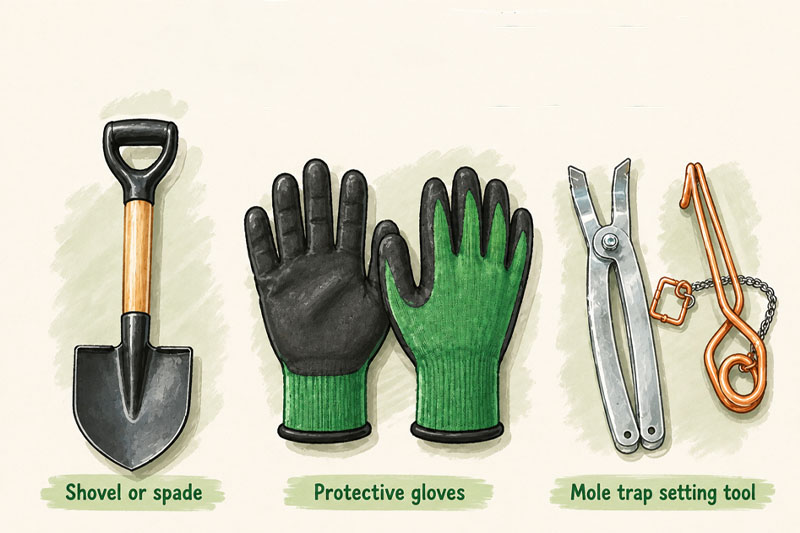
Before you start, prepare everything you need. This makes installation faster and helps you avoid disturbing the mole tunnel more than necessary.
You will typically need:
- Shovel or spade – for opening and covering the tunnel.
- Protective gloves – for handling soil and the trap safely.
- Mole trap setting tool – for setting the spring mechanism more easily.
- Copper Wire Mole Trap – make sure the trap is clean and operates correctly.
Before installation, inspect the trap and confirm that the spring and trigger mechanism move properly.
Step 2: Locate and Open the Mole Tunnel
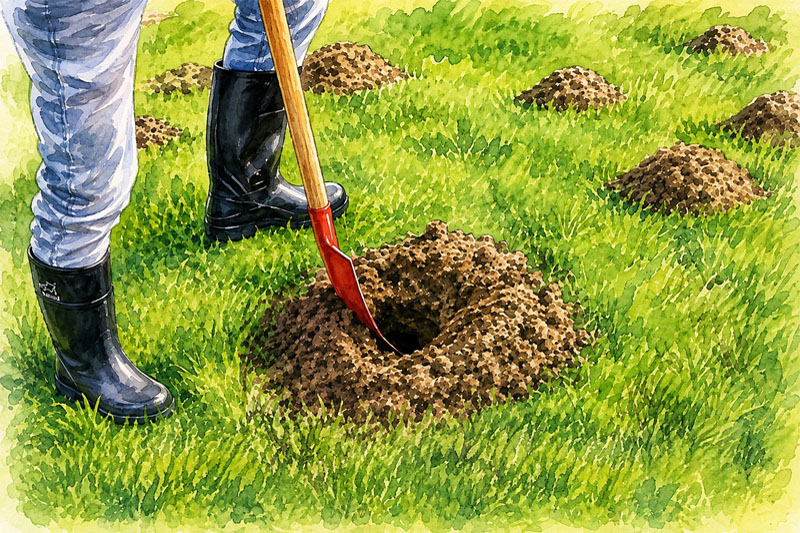
Next, find an active mole tunnel.
Look for fresh molehills, raised soil ridges, or newly disturbed ground. These signs can help you identify areas where moles are currently traveling.
Once you locate a likely tunnel, carefully use a shovel or spade to open the ground above it. Avoid making an unnecessarily large hole because you will need to restore the tunnel after positioning the trap.
Choosing an active tunnel is important. Even a properly installed mole trap will not work effectively if moles are no longer using that tunnel.
Step 3: Clear the Tunnel

After opening the tunnel, gently remove loose soil, stones, roots, and other debris.
Use your gloved hand to identify the direction of the underground passage. You should create enough working space to position the copper wire mole trap while keeping the original tunnel structure as intact as possible.
Make sure the mole can continue moving naturally through the tunnel. Avoid completely collapsing or blocking the passage.
Step 4: Set the Copper Wire Mole Trap
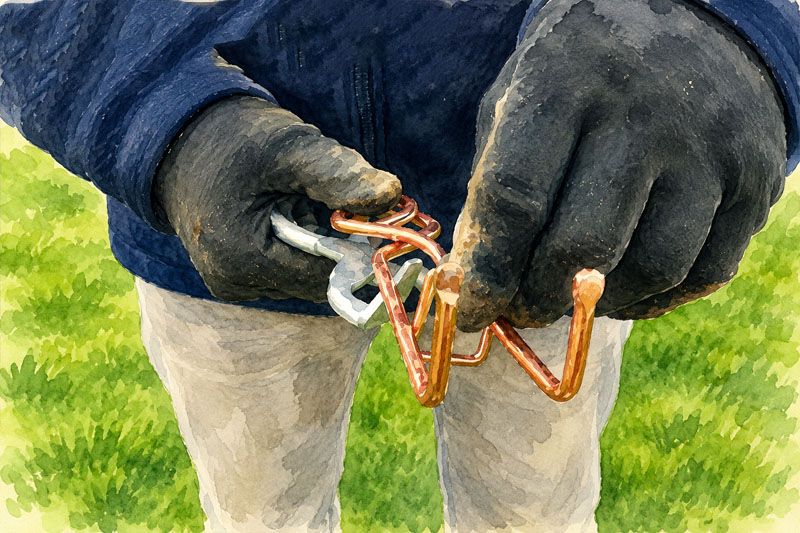
Now you can set your copper wire mole trap before placing it inside the tunnel. Put on protective gloves, work on a stable surface, and keep your fingers away from the jaws, spring, and trigger area.
Attach the mole trap setting tool to the spring arms. Use the tool to carefully compress the spring and open the trap until the jaws are fully separated. Keep steady pressure on the setting tool while you position the trigger mechanism.
Next, install the trigger plate in the center of the trap. Connect it securely to the trigger hook or notch according to the trap design. The trigger plate should sit level across the mole’s travel path so the mole can activate it when moving through the tunnel.
Before you place the trap underground, check that:
- The spring is evenly tensioned.
- The jaws are fully open and correctly aligned.
- The trigger plate is centered, level, and securely connected.
- The trigger moves freely without sticking.
- No soil, roots, or debris can block the mechanism.
Use the setting tool or a small stick to test the trigger gently—never use your fingers. After confirming that the mechanism releases correctly, reset the copper wire mole trap and keep it secured until you are ready to position it in the active tunnel.
Step 5: Place the Trap Inside the Tunnel
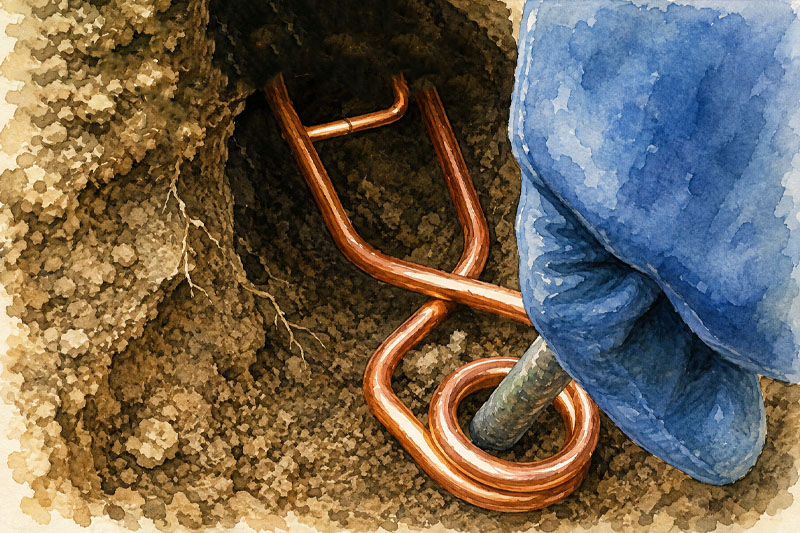
Carefully position the copper wire mole trap inside the active tunnel.
Place it in line with the mole’s natural travel path. The trigger area should sit where the mole is likely to contact it while moving through the passage.
Keep the trap stable and make sure surrounding soil does not prevent the mechanism from closing.
Correct positioning is one of the most important factors in successful mole trapping. If the trap sits too high, too low, or outside the main tunnel, the mole may simply move around it.
Step 6: Cover the Trap and Check Regularly

Finally, carefully cover the opening.
Restore the soil around the tunnel while avoiding direct pressure on the trigger mechanism. The goal is to recreate a dark, enclosed underground passage similar to the mole’s original tunnel.
You can also mark the location so you can easily find the trap later.
Check the trap regularly. If you do not capture a mole after several checks and there is no fresh activity around the location, move the trap to another active tunnel.
Practical Tips for Better Mole Trap Results
You can improve your trapping results by choosing an active tunnel, positioning the trap correctly, and maintaining the mechanism after use.
How to Identify an Active Mole Tunnel
Look for fresh molehills, newly raised soil ridges, or straight tunnels that connect two mound systems or follow a fence, path, or lawn edge. To test a tunnel, gently flatten a short section and mark the location. Check it again within 24 hours. If the soil is raised or repaired, the tunnel is active and is a suitable place for your mole trap.
When to Move the Trap
If the flattened tunnel is not repaired within 24 hours, choose another location. If the trap has not been activated and you see no fresh mole activity after two to four days, move it to another active section of the main tunnel. Avoid repeatedly disturbing the entire tunnel system while you reposition the trap.
Common Reasons a Mole Trap Does Not Work
- You placed the trap in an inactive or temporary feeding tunnel.
- The trap is too high, too low, or not aligned with the center of the tunnel.
- The trigger plate is tilted, unstable, or positioned outside the mole’s travel path.
- Soil, roots, or stones are blocking the jaws or trigger mechanism.
- The trap is unstable, or too much light and air enter the opened tunnel.
- You disturbed or collapsed too much of the original tunnel during installation.
What Happens When the Trap Is Too High or Too Low?
If you place the trap too high, the mole may pass underneath it or push soil below the trigger plate. If you place it too low, the trap may block the tunnel or fail to respond to normal movement. Center the trap in the passage, keep the trigger plate level with the mole’s travel path, and make sure the jaws can close without hitting surrounding soil.
How to Clean and Store Your Mole Trap
After use, put on gloves and carefully release all spring tension before cleaning the trap. Remove soil, roots, and other debris with a brush, then dry the trap completely to reduce corrosion. If the manufacturer allows lubrication, apply only a small amount of suitable mineral oil to the moving parts. Store the clean, unset trap in a dry, secure place away from children and pets.
Choose Professional Copper Wire Mole Trap Wholesaler or Supplier
Paiste is a professional Copper Wire Mole Trap wholesaler and supplier in China, providing reliable mole control products for distributors, wholesalers, supermarkets, retailers, pest control companies, garden suppliers, and commercial pest control projects worldwide.
You can source Copper Wire Mole Traps in bulk for resale, retail distribution, professional pest management, and project supply. We focus on durable materials, reliable trapping performance, consistent quality, and stable production capacity to support your long-term purchasing needs.
Paiste also provides OEM/ODM services, private labeling, customized packaging, logo customization, and bulk order support. Whether you are expanding your pest control product range or sourcing for a large project, you can work with Paiste to build a reliable and efficient supply chain.
Need Professional Pest Control Solutions?
We supply high-quality pest control products for wholesalers, distributors, and pest control companies worldwide.