
When your customers need a practical way to capture nuisance animals without relying on poison, a well-designed cage trap gives you a reusable and easy-to-monitor solution. However, choosing the right model involves more than comparing price. You need to consider the target animal, trap size, wire strength, trigger sensitivity, corrosion resistance and the reliability of the company behind the product.
This guide explains how you can choose, use and source live animal traps with confidence. It also shows you what to expect from a professional cage trap supplier and cage trap manufacturer when you are buying for distribution, retail, farm supply or professional pest control.
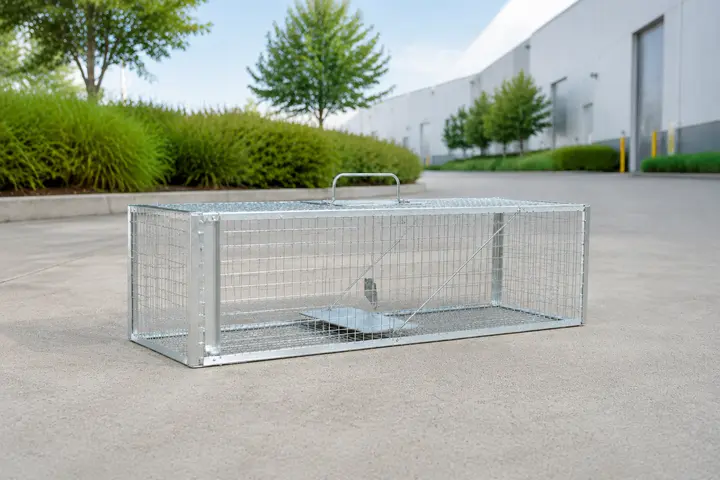
Quick Answer: What Makes a Good Cage Trap?
A good cage trap should match the size and behaviour of the target animal, use a responsive trigger, close securely and remain stable during use. It should also include smooth wire edges and a protected carry handle. For commercial purchasing, you should look for consistent production, corrosion-resistant materials, clear specifications, replacement support and packaging that fits your sales channel.
You can explore Paiste’s complete range of cage traps for live animal control, including multiple sizes and structural designs for different markets.
What Is a Cage Trap?
A cage trap is a mechanical device designed to capture an animal inside a ventilated wire enclosure. When the animal enters and steps on the trigger plate, the door closes and prevents escape. Because the trap holds the animal rather than using poison, it gives you a visible and controlled capture method.
You may also see these products described as live animal cage traps, humane cage traps, wire animal traps, rodent cage traps or live catch traps. The wording changes between markets, but buyers usually expect the same basic qualities: dependable triggering, secure closure, adequate space and durable construction.
A live cage trap can support responsible animal control when you select the correct size, place it properly, inspect it frequently and follow local wildlife and animal-welfare regulations. No trap should be described as automatically humane in every situation; correct use and timely monitoring are essential.
Where Can You Use a Live Animal Cage Trap?
Your customers may use cage traps in many residential, agricultural and commercial environments. Common applications include:
- Farms, barns and poultry buildings
- Warehouses and logistics centres
- Gardens, yards and landscaped properties
- Food storage and processing sites
- Retail stores and garden centres
- Residential garages, sheds and roof spaces
- Professional pest and wildlife management programs
Depending on the size and design, a metal cage trap may be suitable for rats, squirrels, rabbits, raccoons and other small nuisance animals. You should always confirm the intended target species and local rules before selecting or using a trap.
How to Choose the Right Cage Trap
1. Match the Trap Size to the Target Animal
Start by identifying the animal you need to capture. A trap that is too small may prevent the animal from entering fully, while an oversized model may not activate correctly for a lightweight animal. Ask your cage trap supplier for internal dimensions, entrance size, wire spacing and recommended applications instead of relying only on the external length.
2. Check the Wire and Frame Construction
For repeated outdoor or professional use, you need a structure that resists deformation during transport, setting and capture. Look for uniform welded wire mesh, reinforced door frames and stable base construction. Galvanized steel is commonly selected because it offers a practical balance of strength, corrosion resistance and cost.
The coating should be even, and cut wire ends should be controlled to reduce sharp contact points. A reliable cage trap manufacturer should inspect welding, dimensions, door alignment and surface condition during production.
3. Evaluate the Trigger Mechanism
The trigger is one of the most important parts of a cage trap. It should respond when the target animal places sufficient weight on the treadle plate, but it should not release constantly during normal handling.
Before use, test the door and trigger several times. The door should travel freely, close quickly and engage securely. For wholesale purchasing, request samples so you can compare trigger sensitivity and consistency across several units.
4. Look for Safer Handling Features
A protected carry handle helps you maintain distance between your hand and the captured animal. Depending on the model, a solid top plate or handle guard may provide additional separation. Smooth edges, secure door locks and adequate ventilation also support safer operation.
5. Consider Storage, Packaging and Transport
If you are a distributor or retailer, product performance is only one part of your decision. Bulky traps can increase freight and storage costs. Ask whether the products are supplied assembled, foldable or nested, and confirm carton dimensions, units per carton and loading quantities.
A capable cage trap manufacturer should be able to discuss retail cartons, neutral packaging, custom labels, instruction sheets and mixed-model orders.
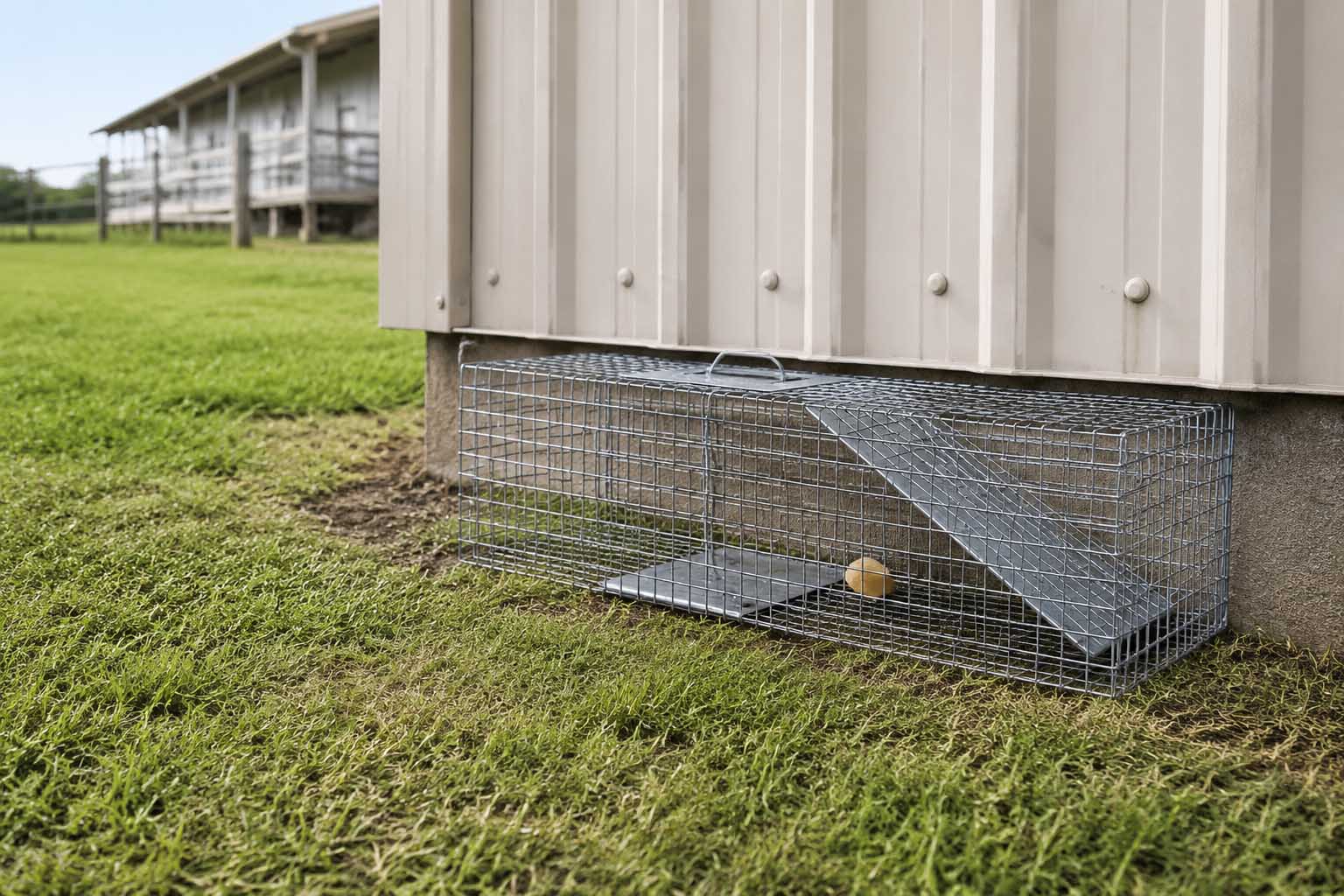
How to Use a Cage Trap Effectively
Step 1: Identify the Animal and Check Local Regulations
Confirm the target species before you set the trap. Wildlife trapping, relocation and release rules vary by country, state and municipality. You should follow local pest-control, animal-welfare and wildlife regulations and contact a licensed professional when required.
Step 2: Inspect and Test the Trap
Wear protective gloves and check the wire mesh, door, trigger plate, handle and locking points. Set and release the mechanism before baiting it. Do not use a trap with damaged wire, a misaligned door or an unreliable trigger.
Step 3: Choose an Active Location
Place the trap where you have seen droppings, tracks, gnaw marks, nesting material or regular animal movement. Position it on stable, level ground and keep the entrance clear. Along walls, fences, building edges and known travel routes is often more effective than placing it in an open area.
Step 4: Position the Bait Correctly
Choose bait appropriate for the target animal and place it beyond the trigger plate so the animal must enter fully. Avoid leaving large amounts of bait near the entrance, because the animal may take the food without activating the mechanism.
Step 5: Set the Door and Test Stability
Set the door according to the product instructions, then confirm that the cage does not rock or tip. If necessary, stabilize it without blocking the trigger or door. Keep children, pets and non-target animals away from the area.
Step 6: Inspect the Trap Frequently
Never leave a set cage trap unattended for long periods. Check it at intervals required by local regulations and often enough to reduce exposure to heat, cold, rain and stress. If an animal is captured, approach calmly and avoid direct contact.
Step 7: Clean and Store It Properly
After use, wear gloves and clean the trap according to local hygiene guidance. Allow it to dry fully before storage. Keep the mechanism free of debris and store the cage in a dry, ventilated area to help maintain trigger performance and surface condition.
Common Cage Trap Mistakes to Avoid
- Using the wrong size: The animal may not enter completely or may fail to activate the trigger.
- Placing bait before the trigger plate: The animal can take the bait without being captured.
- Setting the trap on unstable ground: Movement can make the animal cautious or affect the mechanism.
- Ignoring weather conditions: Direct sun, heavy rain or extreme temperatures can create unnecessary risk.
- Checking too infrequently: Regular inspection is essential for responsible live capture.
- Skipping a test cycle: A damaged or obstructed door may not close correctly.
- Ignoring local laws: Rules for protected species, transport and release can differ significantly.
What Should You Expect from a Cage Trap Supplier?
When you buy for a business, you need more than a product list. A dependable cage trap supplier should help you select models that fit your customers, target animals, price levels and packaging requirements.
Before placing a bulk order, ask the supplier for:
- Complete dimensions, materials and wire specifications
- Clear product photos and operating videos
- Sample availability and sample lead time
- MOQ, production lead time and loading quantities
- Packaging options and barcode or label support
- Quality-control procedures and pre-shipment inspection
- OEM and ODM options for your market
You should also evaluate communication speed and technical accuracy. A professional supplier should answer detailed questions consistently instead of relying on vague claims.
Why Work Directly with a Cage Trap Manufacturer?
Working with a cage trap manufacturer can give you better control over specifications, quality, cost and supply continuity. Direct manufacturing support is especially useful when you need custom dimensions, different wire gauges, surface treatments, handles, doors, packaging or private-label presentation.
However, factory status alone does not guarantee quality. You should confirm that the manufacturer controls incoming materials, welding, assembly, trigger testing, surface inspection and final packaging. Consistency across a bulk shipment matters more than the appearance of a single sample.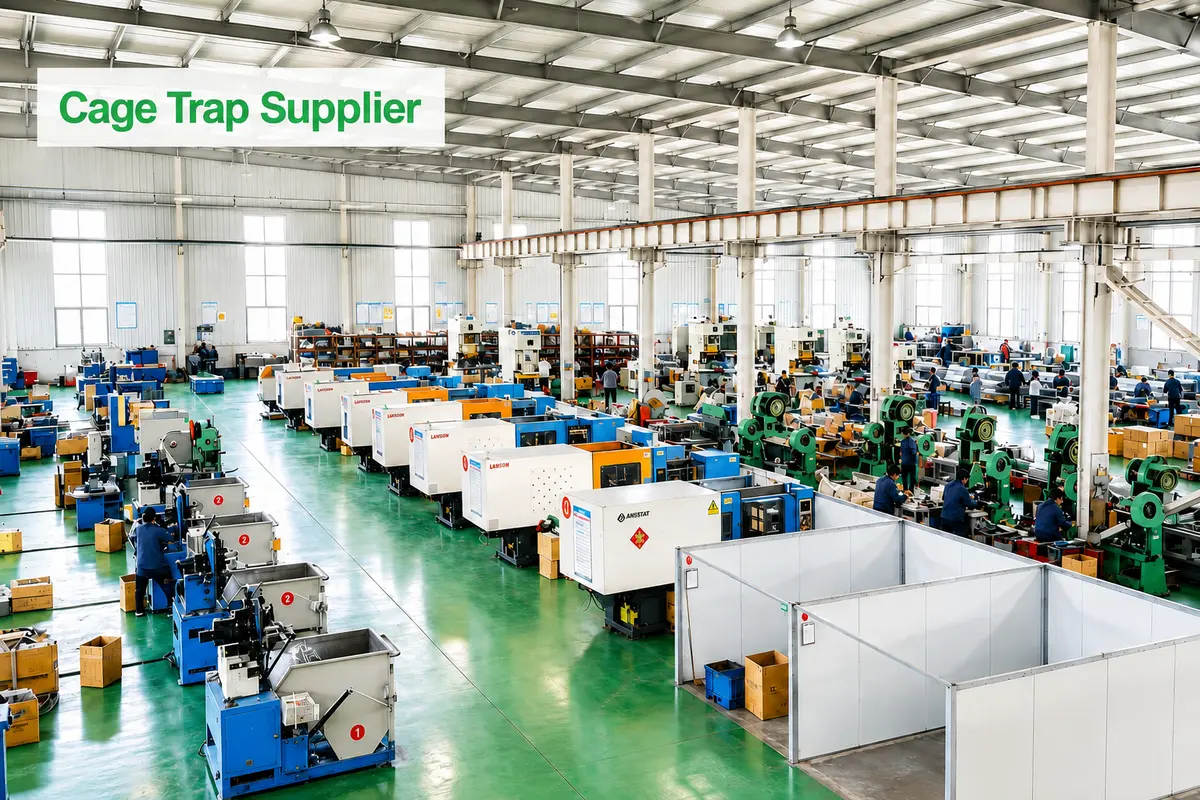
Why Choose Paiste as Your Cage Trap Manufacturer?
Paiste develops and supplies pest-control products for distributors, wholesalers, importers, retailers and professional pest-control companies. When you work with us, you can combine cage traps with a broader range of professional mouse trap solutions for a more complete product program.
Our cage trap range includes multiple sizes and structures for different target animals and sales channels. We focus on practical product design, stable metal construction, reliable trigger performance and consistent production.
As your cage trap supplier, Paiste can support you with:
- Direct manufacturing and stable bulk production
- Multiple cage sizes and structural options
- Incoming-material and finished-product inspection
- Trigger, door and assembly quality checks
- OEM/ODM development and private-label packaging
- Mixed product sourcing for rodent and animal control
- Export support for international distributors
Whether you are expanding an existing pest-control range or launching a new private-label program, you can ask our team to recommend suitable models, packaging and order quantities for your market.
Frequently Asked Questions
What animals can you catch with a cage trap?
The suitable animal depends on the trap size, mesh spacing, trigger design and local regulations. Available models may be used for rats, squirrels, rabbits, raccoons and other small nuisance animals. Always verify the recommended application before use.
Is a cage trap reusable?
Yes. A properly maintained metal cage trap can be cleaned and reused. Inspect the wire, door, trigger and handle after each use, and store the trap dry to support long-term performance.
How often should you check a live cage trap?
You should inspect it frequently and always follow the interval required by local regulations. Weather, target species and location can affect how often checks are needed. Never leave a captured animal exposed for an extended period.
Can Paiste provide wholesale cage traps with custom packaging?
Yes. Paiste supports wholesale cage trap orders, OEM/ODM development, custom labels and packaging options. Requirements depend on the model, order quantity and target market.
How do you evaluate a cage trap sample?
Check overall dimensions, wire alignment, welding, door travel, trigger sensitivity, lock engagement, handle protection and surface finish. Run multiple dry trigger tests and compare several samples when possible.
Build a Reliable Cage Trap Product Range with Paiste
The right cage trap helps your customers manage nuisance animals with a visible, reusable and easy-to-monitor method. The right manufacturing partner helps you maintain consistent quality, practical packaging and dependable supply.
If you are looking for a professional cage trap manufacturer or cage trap supplier, contact Paiste with your target animals, preferred sizes, annual quantity and packaging requirements. We will help you compare suitable cage trap models and prepare a practical wholesale solution for your market.
Need Professional Pest Control Solutions?
We supply high-quality pest control products for wholesalers, distributors, and pest control companies worldwide.