
Choosing electric pest control solutions starts with understanding your customers’ pests, locations, and daily routines. This guide helps you compare practical options for homes, gardens, and farms. Whether you supply distributors, supermarket chains, or pest control companies, you can build a more suitable product range and explain each choice clearly.
Quick answer: Match the device to the target pest first. Then check indoor or outdoor suitability, power supply, maintenance, and performance evidence. Compare samples before placing a wholesale order. The best choice is a product your customer can install correctly, use safely, and maintain consistently.
Why pest problems deserve early attention
Pests can create costly problems for homes and businesses. Rodents can damage packaging and stored goods. Flies create hygiene concerns around waste and food areas. Burrowing animals disturb lawns, while other animals may damage vegetable beds and landscaping.
Your customers may face spoiled stock, repair bills, complaints, and extra service visits. Meanwhile, a poorly matched device can lead to returns and lost trust in your business. Therefore, start with the actual pest problem instead of recommending one product for every situation.
Why choose electric pest control solutions?
Electric devices offer several ways to manage unwanted insects and animals without using a sprayed pesticide for their primary function. Depending on the model, they use an electric grid, an enclosed killing chamber, light attraction, or deterrent signals.
- Less reliance on chemical treatments: Suitable devices can reduce routine spraying in some applications and avoid pesticide spray residues from the device itself.
- Reusable operation: You can use many devices repeatedly when you follow cleaning and maintenance instructions.
- Flexible power options: Solar charging can support outdoor use where a power socket is inconvenient. Check sunlight and battery requirements first.
- A clear product assortment: You can offer separate options for handheld insect control, indoor use, outdoor deterrence, and rodent control.
However, electric does not automatically mean pollution-free or harmless. Batteries, electricity use, disposal, and effects on non-target animals still matter. Combine devices with cleaning, entry-point sealing, and removal of pest attractants. Explore the Paiste electric pest control products range to compare your options.
Choose electric pest control solutions by location
| Customer location | Products to consider | What you should check |
|---|---|---|
| Homes and apartments | Electric Fly Mosquito Swatter; Electric Bug Zapper Indoor | Handheld or stationary use, power supply, cleaning, and safe placement |
| Outdoor gardens and patios | Solar Power Lawn Mosquito Killer Lamp | Sunlight, weather rating, target insects, and realistic expectations |
| Farms, vegetable plots, and gardens | Solar Ultrasonic Animal Repellent | Target animals, sensor position, obstacles, and trial results |
Homes: offer handheld and stationary options
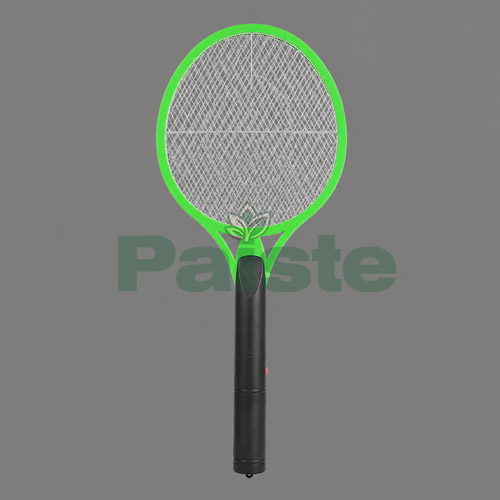
Recommend the Electric Fly Mosquito Swatter when your customer wants to deal with individual visible flies or mosquitoes. A handheld swatter requires active use; it does not provide continuous room protection.
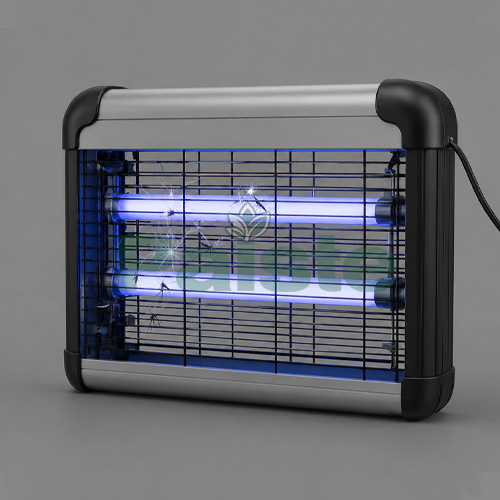
For a stationary option, compare the Electric Bug Zapper Indoor GKEP-3. Check its instructions before choosing a position. Keep electrical grids away from children and pets. Do not place a zapper over exposed food or food preparation surfaces.
Outdoor gardens: check solar charging and insect attraction
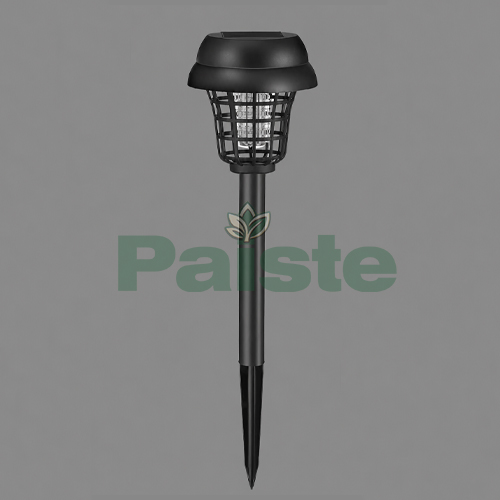
The Solar Power Lawn Mosquito Killer Lamp GKEP-1 combines a garden-light format with an insect-control function. Consider it for customers who want a solar-powered garden accessory without permanent mains wiring.
Check direct sunlight, the weather rating, and operating instructions. Do not judge mosquito control by the total number of insects caught: light attraction differs by species. Present the lamp as a supplementary option. Also advise customers to remove standing water and maintain screens.
Farms and vegetable gardens: assess animal entry routes
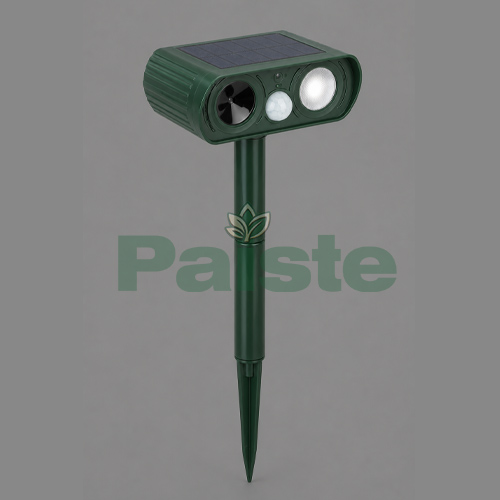
Consider the Solar Ultrasonic Animal Repellent GKEP-4 for outdoor customers seeking a deterrent option. Its product page describes solar power, motion detection, ultrasonic output, and flashing lights.
First, identify the animal and its entry route. Next, check whether vegetation blocks the sensor and whether nearby pets or livestock could be affected. Trial the device before recommending a larger installation. Results can vary with animal behavior and site conditions.
Match the product to the target pest
Rats and mice: compare an electric rodent kill box
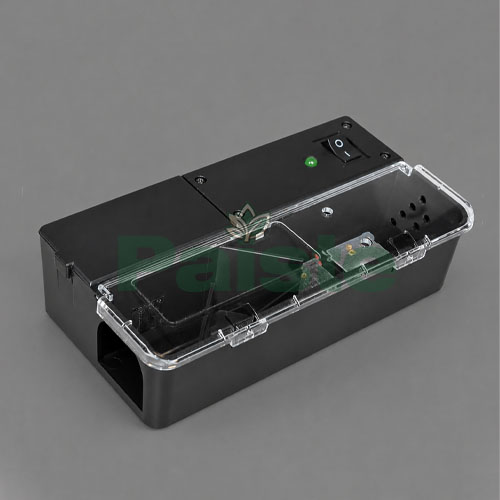
The Electric Rodent Kill Box is an option to assess for electric rodent control. Before ordering, confirm which rodent sizes the model accepts, where it may be used, and how users should inspect and empty it.
Explain the difference between a lethal electric trap and a live-capture trap. Your customers should also seal entry points and improve storage practices. This makes your recommendation more useful than simply supplying a device.
Moles and snakes: choose a dedicated product and verify suitability
For customers asking about mole or snake deterrence, consider the Solar Ultrasonic Mole Snake Repellent. Request the exact model specifications, installation instructions, and evidence for the target species. Confirm how the device operates and whether it suits the customer’s ground conditions.
Do not promise a snake-free area or guaranteed mole removal. Combine your recommendation with suitable habitat management and exclusion measures. For snake concerns, Colorado State University Extension’s guidance explains why repellent claims need careful evaluation.
Mosquitoes and flies: separate spot control from area management
For individual visible insects, offer the electric swatter. For a garden product assortment, assess the solar lawn lamp. Neither choice should be presented as a complete answer to every mosquito or fly problem.
Ask where insects breed or enter. Waste management, screens, and standing-water removal remain important. The EPA’s mosquito prevention guidance provides additional practical steps you can share with customers.
How to use electric pest control products correctly
- Identify the problem. Record the pest, activity location, and likely entry or breeding points.
- Read the exact model’s manual. Check power input, charging, indoor or outdoor use, and placement limits.
- Prepare the location. Keep solar panels clear. Aim sensors toward relevant entry routes and protect devices from unsuitable moisture exposure.
- Install as instructed. Keep grids and trap chambers inaccessible to children and pets. Avoid flammable vapors and sprays near electrical insect killers.
- Inspect and clean regularly. Switch off and disconnect power before maintenance. Follow the manual’s discharge, cleaning, and handling instructions.
- Measure results. Keep an activity log. If the problem continues, review identification and placement or seek professional support.
When you supply pest control companies, include maintenance information with every model. For supermarket chains, make sure retail packaging clearly explains what the product does and where customers can use it.
Help your customers choose with confidence
Make sales conversations simpler with four questions: Which pest is causing the problem? Where does it occur? What power source is available? Who will maintain the device?
Then give a specific recommendation. A homeowner dealing with occasional visible flies may prefer a swatter. A garden retailer may need solar products for a seasonal display. A pest control company may value servicing access and clear operating instructions.
Build a comparison sheet for each product: intended pest, location, power source, maintenance, limitations, and reorder reference. This helps your sales team explain electric pest control solutions consistently and reduces misunderstandings after purchase.
Choose Paiste as your electric pest control supplier
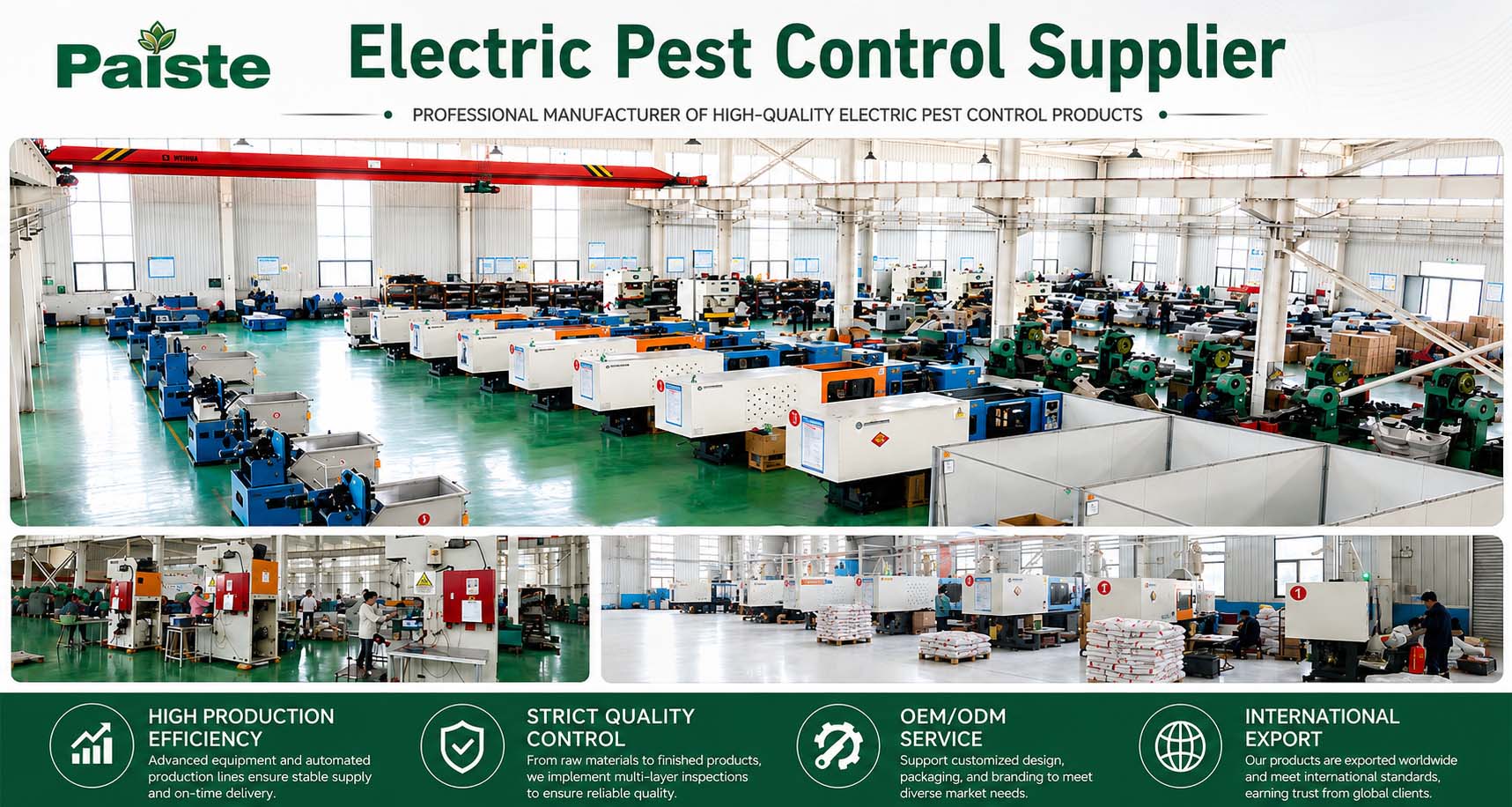
Paiste is a China-based pest control products manufacturer, supplier, wholesaler, and exporter serving international B2B buyers. You can source electric pest control products for distribution, supermarket retail, and professional pest management channels.
Start with your target market and customer applications. Then discuss samples, quantities, packaging, and delivery requirements. Paiste’s published range includes OEM and ODM options, so you can also discuss private-label requirements.
When comparing an electric pest control manufacturer, review the sample and written specifications. Confirm inspection criteria, accessories, packaging artwork, and after-sales arrangements before production. Visit About Paiste to learn more.
FAQ: wholesale and private-label purchasing
What should you include in a wholesale quotation request?
Send product links, estimated quantity per model, destination country, packaging requirements, and preferred delivery timing. Ask what the quotation includes, how long it remains valid, and which costs require separate confirmation.
How can you compare the cost of imported pest control equipment?
Compare landed cost per sellable unit, not only the factory price. Include freight, import charges, inspection, packaging changes, and servicing costs. Use the same assumptions for each quotation.
What should you check for private-label pest control products?
Review your logo artwork, barcode readability, packaging language, model identification, and manual version. Approve a physical packaging sample where practical. Confirm which customization choices affect minimum quantities or production timing.
Can you combine several models in one order?
Ask Paiste whether your proposed combination is available and confirm minimum quantities for each model. A mixed assortment may help you test demand. However, availability, packing arrangements, and order terms need confirmation for your purchase.
Which documents should you request before a retail launch?
Request the specification sheet, instruction manual, relevant test reports, and documents for the exact electrical and battery configuration. Have your importer or qualified adviser check destination-market requirements. Do not assume one model’s documents cover the entire range.
Build your product range with Paiste
Partner with Paiste to build a practical pest control range for your market. You can discuss product selection, wholesale quantities, private label packaging, and export requirements with one supplier. Share your target pests, sales channels, and destination country, and request a tailored quotation to plan your next order with confidence.
Contact Paiste for product specifications and a wholesale quotation.
Need Professional Pest Control Solutions?
We supply high-quality pest control products for wholesalers, distributors, and pest control companies worldwide.