
If you buy rodent control products for the United States, the United Kingdom or the European Union, a lockable rat bait station may look like a simple plastic box. In practice, the lock, housing, service access, bait layout and product documents can affect whether the station fits your market.
This guide helps you compare those buying needs without treating three markets as one. You will also see how four Paiste rat bait stations can support different wholesale ranges and professional pest control jobs.
Quick answer: A good lockable rat bait station should restrict casual access, protect bait, open quickly for trained service staff and stay stable at the placement point. However, “lockable” and “tamper-resistant” are not automatic certificates. You must check the rodenticide label, local rules and any test or document requested by your importer before you market a model for a regulated use.
Why the Lock Matters More in Professional Rodent Control
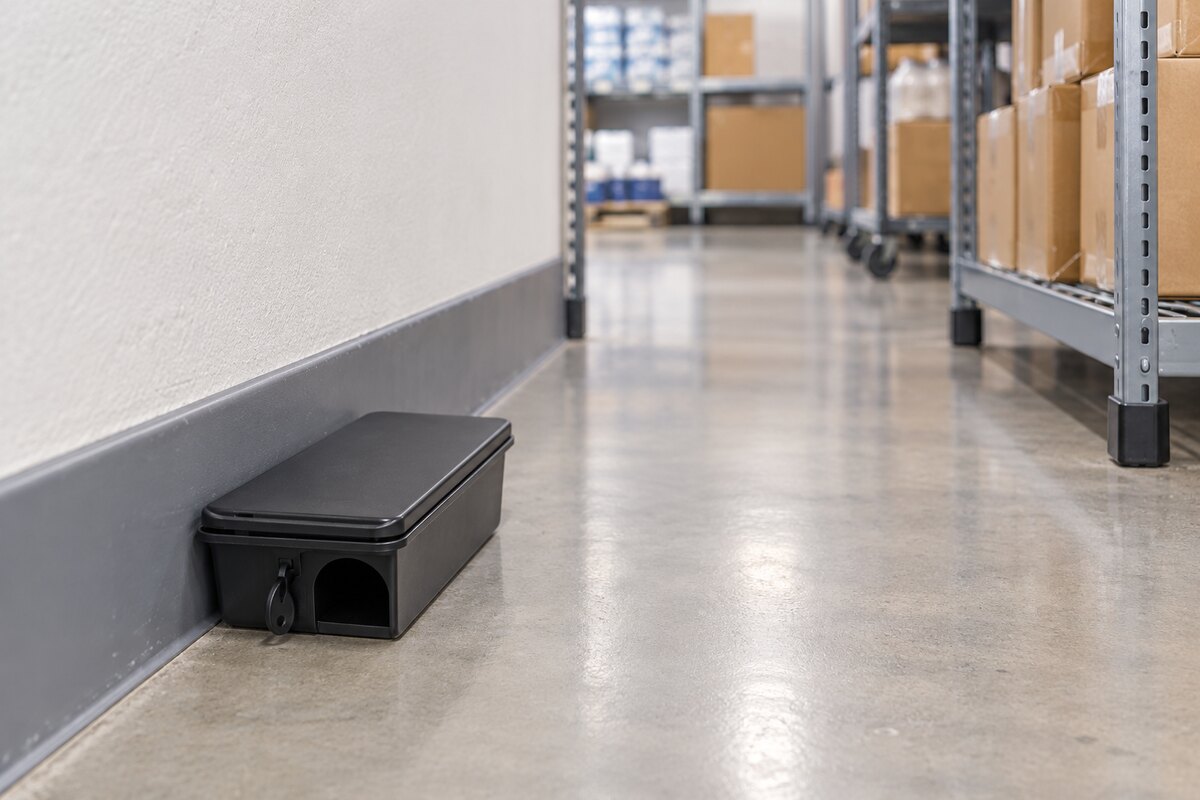
Rodents often travel beside walls, shelves, loading doors and utility lines. A well-designed station lets you place bait on that travel path while keeping it inside a closed housing. The cover also shields bait from dust, light and normal weather exposure.
The lock adds another layer of control. It reduces casual opening and lets a trained technician inspect the station with a key. Yet you should evaluate the complete design, not the lock alone. A buyer also needs to check the strength of the lid, the size of the entry points, the internal bait holder and the method used to anchor the unit.
US, UK and EU Buyers Do Not Ask the Same Questions
| Market | Main buying concern | What you should request from a supplier |
|---|---|---|
| United States | Many rodenticide labels require a tamper-resistant bait station when children, pets or non-target wildlife may reach the bait. Outdoor, above-ground applications can also require one. | Lock details, anchoring options, station dimensions, material data and any test evidence needed for your intended product and channel. |
| United Kingdom | Professional use sits within a strong rodenticide stewardship system that covers safe use, training, auditing and supply-chain control. | Clear instructions, service labels, replacement keys, stable repeat quality and packaging suited to professional distribution. |
| European Union | Authorised rodenticide uses and labels can require bait to be placed in tamper-resistant stations. Conditions can vary by active substance, product and country. | Technical product information, material and packaging records, traceability, language-ready instructions and confirmation from your local authorisation holder. |
For the US, you can review the EPA restrictions on rodenticide products. The agency explains when labels require tamper-resistant bait stations. UK buyers should also review the HSE guidance on rodenticide stewardship. In the EU, authorisation conditions under the Biocidal Products Regulation can require ready-to-use bait to be used in tamper-resistant stations, as shown in official EU product authorisation documents.
Important: Paiste manufactures the station hardware. Your bait supplier, authorisation holder or local compliance adviser should confirm whether a selected station and bait combination meets the exact rules in your destination market.
Seven Features to Check Before You Place a Wholesale Order
1. Lock and key control
Open and close sample units several times. Check whether the lid seats correctly and whether the key works without excessive force. You should also ask whether replacement keys remain available for repeat orders.
2. Housing strength
Inspect the hinge area, lid edge and entrance walls. A commercial station needs consistent wall thickness and good part fit. Strong material helps the housing resist normal impacts during transport, placement and routine service.
3. Anchoring and stability
A lockable lid does not stop the entire station from moving. If the rodenticide label requires the unit to be secured, you need a suitable fixing method or anchoring point. Ask your supplier how the model can be fixed at the intended site.
4. Protected bait layout
The internal space should hold the permitted bait form in a stable position. It should also let your technician see consumption and replace material without a long service stop.
5. Fast inspection
Your pest control customers may service hundreds of points. A simple key action, clear internal layout and easy-clean surface can save time on every visit.
6. Correct size for the placement point
A large station can provide more internal room, while a compact unit can fit narrow wall lines and tight service areas. You should build a range instead of forcing one model into every job.
7. Repeat-order consistency
Compare approved samples with production units. Check dimensions, lid fit, lock action, color and packaging. Consistent batches help distributors reduce returns and keep spare keys compatible.
Four Paiste Models for Different Buyer Needs
Paiste manufactures several plastic bait station sizes. The following four models give you a practical way to build a good-better-best product range for distributors, large retailers and pest control companies.
| Model | Listed size | Best fit in a product range | Key purchasing value |
|---|---|---|---|
| GKMT-12 | 26.5 × 20.5 × 10.5 cm | Large professional station | A spacious internal area, enclosed housing and secure locking structure suit commercial and higher-activity placement points. |
| GKMT-13 | 22.7 × 12.5 × 7.5 cm | Compact commercial station | The narrow, low-profile body fits wall lines in warehouses, stockrooms and other space-sensitive areas. |
| GKMT-22 | 12.5 × 10 × 3.7 cm | Small placement point | The compact body supports tighter sites and lets a distributor add a smaller price and size option to the range. |
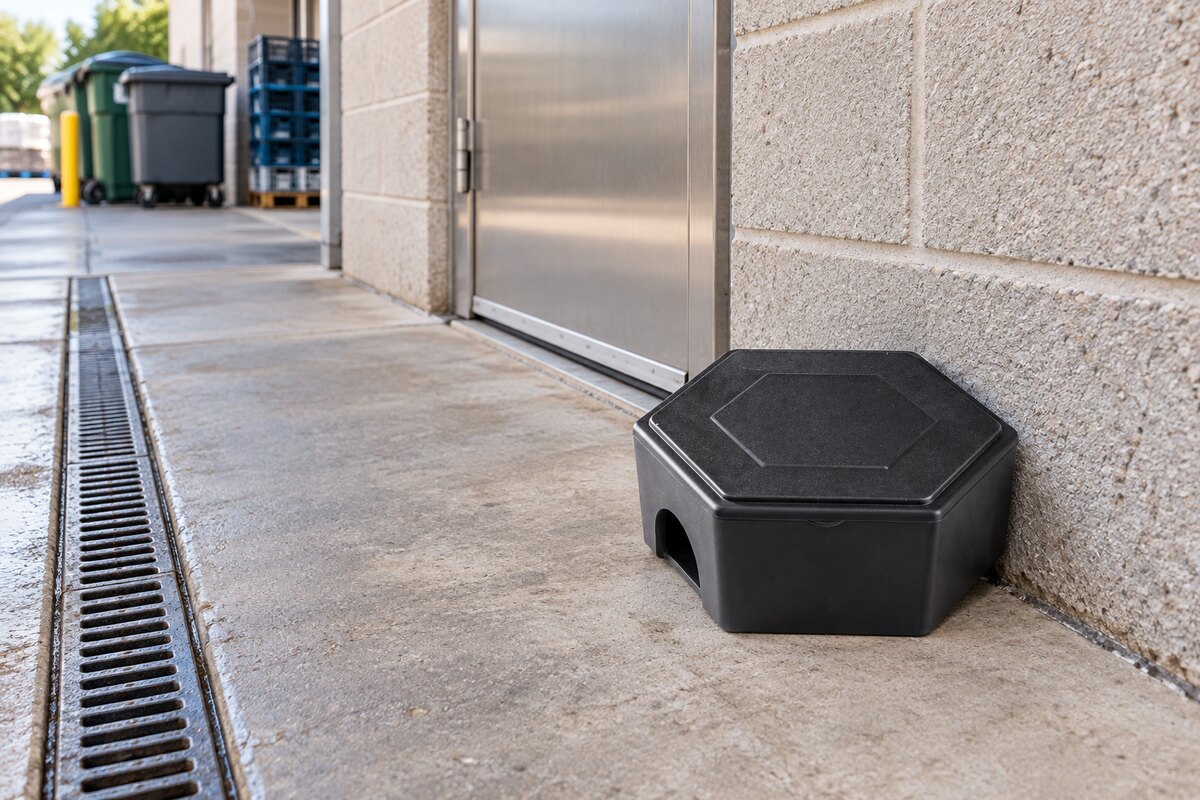
| GKMT-16 | 7.68 × 6.89 × 3.35 in | Distinctive high-capacity option | The hexagonal form provides a different footprint and a larger internal area for permitted bait blocks, pellets or a compatible trap. |
How You Can Build a Better Range for Your Sales Channel
If you supply professional pest control companies, lead with service speed, spare keys, stable locks and repeat-order consistency. Your customers care about how quickly technicians can inspect many units and whether the same model stays available.
If you sell through a large retailer or home-improvement chain, focus on clear packaging, simple instructions, barcodes and carton efficiency. You should also separate hardware claims from rodenticide claims. The station does not become approved for every bait simply because it has a lock.
If you distribute a full pest control range, use the four models to cover different placement spaces and price levels. You can pair a larger station such as GKMT-12 with the compact GKMT-13 and GKMT-22, then add GKMT-16 as a distinctive higher-capacity option.
Documents to Ask for Before Importing
A reliable rat bait station supplier should help you compare more than the unit price. Before you confirm a bulk order, request:
- Final dimensions and unit weight
- Plastic material information
- Lock and key details
- Internal product photos
- Anchoring or fixing information
- Packaging dimensions and carton quantity
- Barcode, label and instruction options
- Approved sample and quality-control standard
- Batch or carton traceability information
For EU orders, you should also collect packaging material and weight data. This information helps your importer prepare for packaging, recycling and extended producer responsibility duties.
Why Work with Paiste as Your Rat Bait Station Manufacturer?
Paiste is a professional rat bait station manufacturer and wholesale supplier in China. We supply overseas distributors, dealers, large retailers and pest control companies.
You can source standard models or discuss OEM and private-label projects. Depending on the model and order, Paiste can support custom colors, logos, labels, instructions, retail boxes and carton marks. Our team also checks molded parts, lid fit, lock operation, appearance and packaging during production.
Most importantly, you can choose from several station sizes instead of relying on one universal design. This helps you match your local buyers, price levels and service conditions more closely.
Frequently Asked Questions
Is every lockable rat bait station tamper-resistant?
No. A physical lock helps restrict access, but “tamper-resistant” can carry specific label, performance or test requirements. You should verify the exact requirement for the bait product, user group and country.
Do US rules require a bait station for every rodenticide use?
Not in every situation. EPA requirements appear on the product label and depend on the use site and possible access by children, pets or non-target wildlife. Follow the label for the rodenticide you plan to use.
What should a UK professional buyer check?
You should check the authorised bait label, stewardship guidance, service procedure, station security and supply-chain documents required by your business or customer.
Can the same station be sold in every EU country?
The hardware may be suitable for several markets, but rodenticide authorisations, label language and distribution duties can differ. Confirm the final bait-and-station use with the local authorisation holder or compliance adviser.
Which Paiste model should you choose?
Choose GKMT-12 when you need more internal room, GKMT-13 for a slim commercial layout, GKMT-22 for tight placement points, or GKMT-16 when you want a distinctive hexagonal station with more usable space.
Can Paiste supply wholesale and private-label orders?
Yes. Paiste supplies overseas distributors, dealers, retailers and pest control companies. You can discuss bulk pricing, logo options, packaging, labels and other OEM or ODM requirements with the factory team.
Choose the Station Before You Choose the Carton
A strong wholesale program starts with the use site, target channel and local rules. First, decide where your customer will place the station and how technicians will service it. Next, confirm the bait label and required safety level. Then select the model, lock, packaging and documents.
Explore the complete Paiste rat bait station range, or contact Paiste to compare GKMT-12, GKMT-13, GKMT-22 and GKMT-16 for your wholesale market.
Need Professional Pest Control Solutions?
We supply high-quality pest control products for wholesalers, distributors, and pest control companies worldwide.