
When you compare steel vs plastic rat bait stations, the right choice depends on the job your customer needs to do. Material affects handling and maintenance, but the lock, layout and fixing method matter too.
If you supply dealers, distributors, large retail chains or pest control companies, you need products that your buyers can explain and service easily. This guide helps you compare a metal bait station with a plastic model before building your wholesale range.
Steel vs plastic rat bait stations: a practical comparison
| Buying point | Steel housing | Plastic housing |
|---|---|---|
| Body checks | Check sheet thickness, seams, edges and lid fit. | Check wall thickness, molding, hinges and lid fit. |
| Outdoor exposure | Check the protective finish and signs of corrosion. | Check UV suitability and signs of cracking or distortion. |
| Handling | Compare actual unit weight and carton weight. | Compare actual unit weight and carton weight. |
| Routine service | Check lock access, bait holders and cleaning access. | Check lock access, bait holders and cleaning access. |
| Safety evidence | Request evidence for the exact station design and use. | Request evidence for the exact station design and use. |
Use this table as a sample-checking guide. It is not a test result for every steel or plastic product. Two stations made from the same material can perform differently because their shapes, thicknesses and closures differ.
When should you consider a steel rat bait station?
A steel model gives you a metal housing to assess for your customer’s site. During sample review, inspect the lid, folded edges and joints. Open and close the station several times and check that the lock still lines up.
Next, review the finish. Galvanized steel has a zinc coating, but you should still inspect damaged areas and confirm suitability for wet or corrosive conditions. Ask how your customer should clean and maintain the unit.

The Paiste GKMT-32 steel rat bait station lists a size of 40 × 12 × 11.5 cm, a silver finish and a weight of 800 g. Its product description identifies a galvanized steel body. Use these details to check space requirements and packing plans, then confirm the current specification with your quotation.
When should you consider a plastic rat bait station?
A plastic model lets you assess a molded body and its internal layout. Look closely at the hinges, lid edges and locking points. Check how easily you can reach the bait holder without forcing or bending parts.
For outdoor orders, request material and weather-exposure information for the exact model. You should not treat all plastic housings as having the same UV resistance or impact strength.
Three plastic models for your shortlist
You can compare these three Paiste models by their published size and body layout. Confirm the exact specification before placing your order.
| Model | Listed size | What you can compare |
|---|---|---|
| GKMT-22 | 12.5 × 10 × 3.7 cm | Compact dimensions and available space at the use site. |
| GKMT-12 | 26.5 × 20.5 × 10.5 cm | Larger external dimensions, lid access and internal arrangement. |
| GKMT-16 | 7.68 × 6.89 × 3.35 inches | Hexagonal body layout and placement fit. |

View the Paiste GKMT-22 bait station. If you need a compact model in your range, review its dimensions and check the usable interior on a sample.

View the Paiste GKMT-12 bait station. Compare its larger outer dimensions with the space your customer has available. Check bait holder fit separately from overall size.
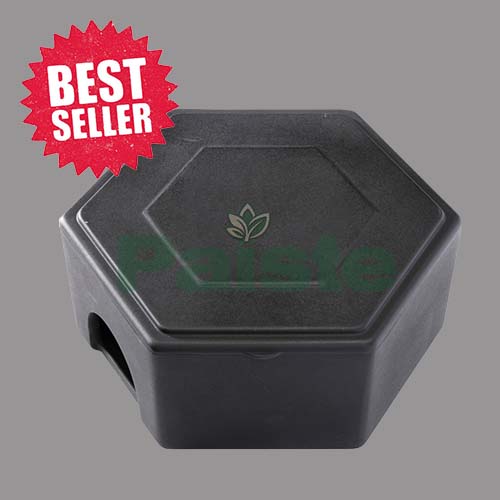
View the Paiste GKMT-16 bait station. Consider this hexagonal design when you compare body shapes and service access. Confirm how you will position and secure it at the site.
The published specification sections for all three plastic models list mouse as the target animal. If your order is for rats, ask Paiste to confirm the suitable model and entry dimensions. These products differ in size and shape, so they are not an equal-size test of steel against plastic.
Check the complete station before comparing price
Target rodent and internal layout
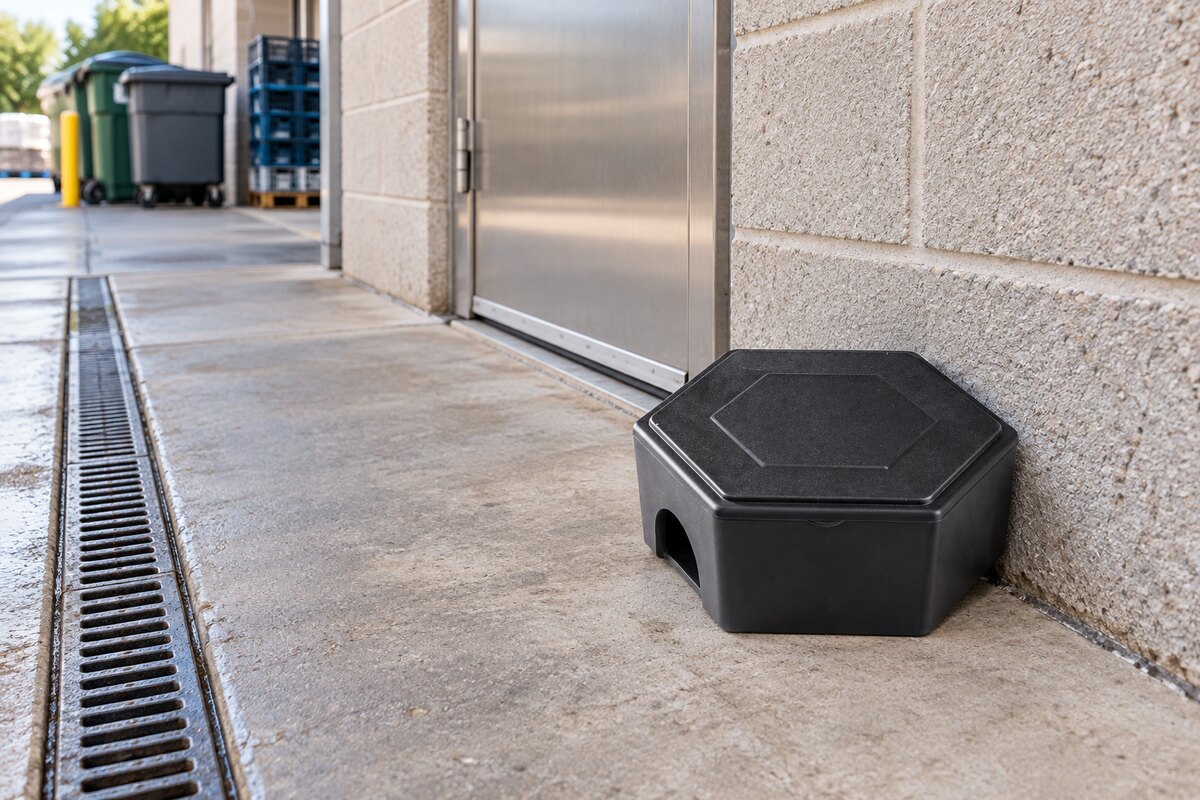
Confirm which rodent the station is designed for. Check entry dimensions, usable space and the bait holder against the intended bait format. A product name alone is not enough to establish suitability.
Lock and fixing method
Test the key and closure on your sample. Ask how you should secure the unit at the use site. A heavier housing does not replace proper anchoring, and a lock alone does not prove tamper resistance.
Inspection and cleaning
Ask a technician to open, inspect and close each sample. Note any awkward corners or parts that are easy to lose. Confirm the approved cleaning method and access to replacement keys or other service parts.
Always follow the bait label and local requirements. A bait station holds bait; it does not catch a rodent unless it also contains a suitable trap. For US household products, the EPA explains that bait station protection levels and permitted uses differ. That guidance does not establish an approval or rating for these Paiste models.
Build a range around your sales channel
If you supply distributors: Give each model a clear role. Provide dimensions, target rodent information, packing details and an accurate specification sheet so your dealers can compare products.
If you supply large retail chains: Confirm whether you are quoting an empty station or a packaged kit. Agree on labels, keys, instructions, barcodes and carton quantities before approving the order.
If you supply pest control companies: Put service access, fixing options and repeat-order consistency near the top of your checklist. A useful sample trial can reveal practical differences that product photos cannot show.
Compare the cost of a usable unit
Your purchase price is only one part of the comparison. Add packing, freight and any required keys or fixing parts. Then consider the work involved in inspection and upkeep.
Ask for a quotation that states the model, dimensions, material, included parts and quantity per carton. Keep the same requirements across quotes. Otherwise, a cheaper offer may describe a different package.
Frequently asked questions
Is a metal rat bait station always better than plastic?
No. You need to compare the complete design with your customer’s use site. Body strength, finish, lock function and service access matter more than a general material claim.
Can you use plastic bait stations outdoors?
You can consider models designed for outdoor exposure. Confirm the exact product’s weather suitability, fixing method and permitted use with the intended bait.
Does a steel body make a station tamper-resistant?
No. You need evidence for the whole station, including its closure and access points. Do not assume that steel construction or a key lock proves a particular rating.
Should you stock both materials?
You may benefit from both if your customers have different requirements. Start with a clear need for each model and test samples before expanding your range.
Work with Paiste on your wholesale range
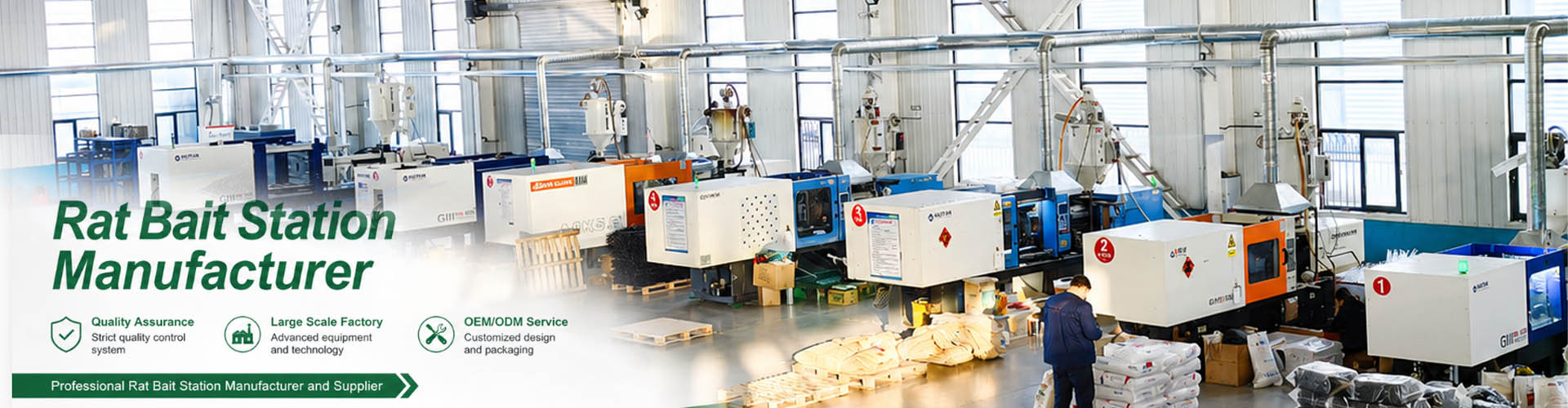
Paiste is a professional rat bait station manufacturer and wholesaler in China. We supply overseas dealers, distributors, large retail chains and pest control companies.
Explore our wholesale rat bait station range and send us your target market, intended use and order quantity. You can discuss model selection, logo options and packaging before placing a bulk order.
Need Professional Pest Control Solutions?
We supply high-quality pest control products for wholesalers, distributors, and pest control companies worldwide.